Every year, counterfeit goods cost manufacturers billions in lost revenue and eroded consumer trust. From mislabeled agricultural inputs to fake automotive parts, the problem isn’t just financial—it’s a matter of safety and brand credibility. This is where serialization solutions step in as one of the most effective answers to modern supply chain challenges.
For manufacturers operating across fragmented distribution networks, knowing exactly where a product goes, who touches it, and whether it reaches the end customer unaltered has become essential. Serialization solutions give businesses that visibility, turning a simple product code into a powerful tool for tracking, authentication, and protection.
In this guide, we’ll break down what serialization solutions are, how they work, the technologies behind them, and why they’ve become indispensable for manufacturers across industries.
What Are Serialization Solutions?
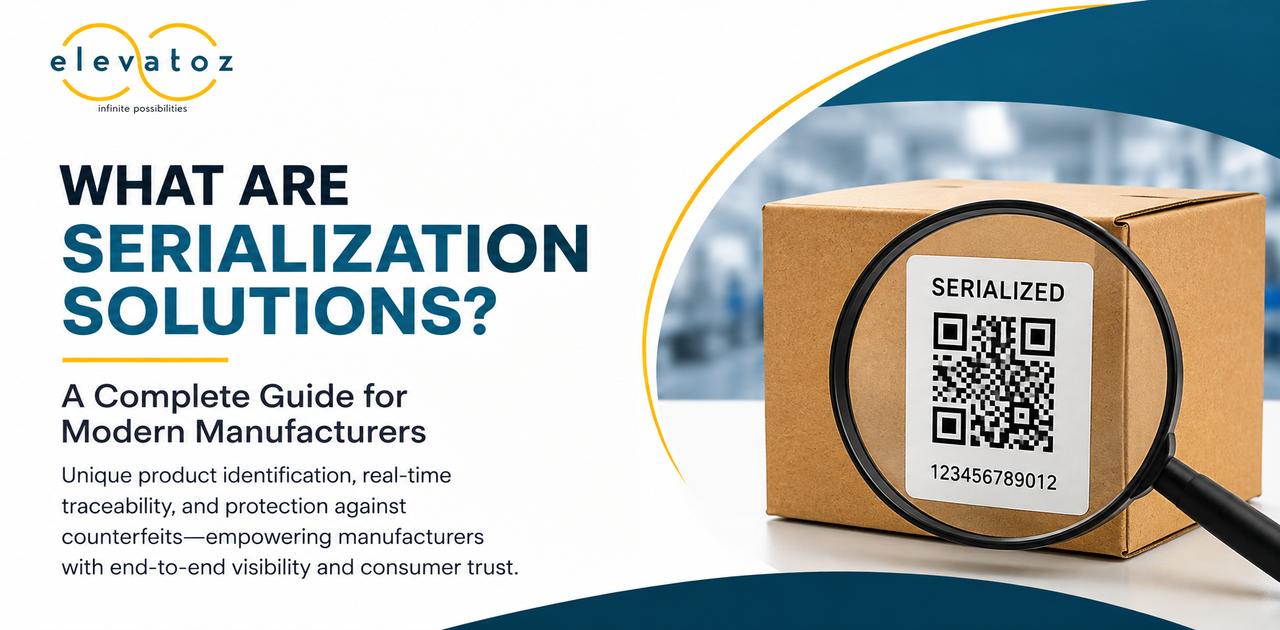
Serialization solutions refer to the process of assigning a unique identifier—such as a code, number, or digital tag—to individual products, batches, or packaging units. Unlike generic batch codes that apply to thousands of units at once, serialization creates a distinct digital identity for each item.
This unique ID becomes the foundation for tracking a product’s journey from the factory floor to the retail shelf. When integrated into a broader end-to-end traceability system, manufacturers can capture real-time data at every checkpoint—manufacturing, warehousing, distribution, and final sale.
In essence, serialization answers three critical questions for any manufacturer: What is this product? Where has it been? And is it genuine?
How Serialization Works in Manufacturing
The serialization process typically follows a structured workflow:
1. Unique ID generation – A unique code is created for each product or batch during manufacturing.
2. Code application – The identifier is printed, embossed, or embedded onto packaging using QR codes, barcodes, or RFID tags.
3. Data capture – Each scan or verification event—at the factory, warehouse, distributor, or point of sale—is logged into a centralized system.
4. Visibility and reporting – Manufacturers gain a consolidated view of product movement, helping identify gaps, delays, or suspicious patterns.
This structured flow of data is what transforms simple product codes into a functioning product traceability software ecosystem, giving brands granular visibility well beyond primary billing.
Types of Serialization Technologies
Manufacturers can choose from several serialization technologies depending on their product category, budget, and traceability goals.
| Technology | Best Suited For | Key Advantage |
| QR Codes | FMCG, pharma, consumer goods | Easy consumer scanning, rich data storage |
| Barcodes | High-volume manufacturing lines | Fast, low-cost, widely compatible |
| RFID Tags | Automotive, electronics, logistics | Contactless bulk scanning, real-time tracking |
| Unique Alphanumeric IDs | Building materials, agriculture | Simple verification via SMS or app |
A well-implemented QR code traceability system remains one of the most popular choices because it combines affordability with consumer-facing engagement—customers can scan a code directly to verify authenticity, view batch details, or access loyalty rewards.
Benefits of Serialization for Manufacturers
Serialization delivers value across multiple business functions, not just compliance:
• Enhanced supply chain visibility – Track products across every distribution layer, including secondary and tertiary sales.
• Stronger regulatory compliance – Meet industry-specific labeling and traceability mandates with structured data trails.
• Reduced counterfeiting risk – Make it significantly harder for fake products to enter genuine distribution channels.
• Improved consumer trust – Let customers verify authenticity instantly, strengthening brand credibility.
• Data-driven decision-making – Use scan and movement data to identify inefficiencies, leakage points, or underperforming regions.
These benefits compound when serialization is combined with complementary tools like channel loyalty programs, where verified product movement data also feeds into partner incentive structures.
The Role of Serialization in Product Traceability and Authentication
Traceability and authentication are two sides of the same coin. While traceability focuses on tracking a product’s journey, authentication confirms that the product itself is genuine.
A robust product authentication system relies on the unique identifiers created through serialization. When a distributor, retailer, or end consumer scans a code, the system cross-checks it against the original database. If the code doesn’t match, has already been scanned elsewhere, or shows irregular patterns, it flags a potential authenticity issue immediately.
This real-time verification capability is what makes serialization such a powerful layer within broader brand protection solutions in India, where manufacturers need fast, reliable ways to distinguish genuine products from duplicates.
How Serialization Prevents Counterfeit Products
Counterfeiting thrives in environments with limited visibility. Serialization directly disrupts this by making every unit individually trackable and verifiable. Here’s how it works in practice:
• Duplicate detection – If the same code is scanned multiple times from different locations, the system raises an alert.
• Geo-tagged verification – Scan locations reveal whether products are appearing in unauthorized markets or regions.
• Consumer-led reporting – When customers can verify products themselves, suspicious activity gets reported faster.
• Supply chain accountability – Every checkpoint scan creates a data trail, making it easier to isolate where counterfeit products entered the chain.
This is central to effective counterfeit prevention in supply chain management, especially for manufacturers dealing with high-value or safety-critical products.
Industries That Benefit from Serialization
Serialization isn’t limited to one sector—it’s relevant wherever product authenticity and movement visibility matter:
• FMCG – Protects fast-moving consumer goods from duplication in high-volume retail networks.
• Pharma – Ensures patient safety through verified, traceable medicine batches.
• Agriculture – Confirms authenticity of seeds, fertilizers, and crop protection products.
• Electronics – Prevents grey-market and counterfeit component circulation.
• Building Materials – Verifies genuine products across dealer and distributor networks.
• Automotive – Protects spare parts and accessories from unauthorized duplication.
• Consumer Goods – Builds trust through scan-based verification at the point of purchase.
Key Features to Look for in Serialization Solutions
When evaluating a serialization partner, manufacturers should prioritize:
• Scalable unique ID generation across product lines
• Support for multiple technologies (QR, barcode, RFID)
• Real-time scan data and analytics dashboards
• Integration capability with ERP and distribution systems
• Consumer-facing verification tools
• Robust reporting for compliance and audits
Best Practices for Implementation
Successful serialization rollouts share a few common principles:
5. Start with a pilot batch before scaling company-wide.
6. Train channel partners and distributors on scanning workflows.
7. Integrate serialization data with existing ERP or inventory systems.
8. Monitor scan analytics regularly to catch irregularities early.
9. Combine serialization with consumer engagement incentives to encourage verification.
Reviewing relevant case studies from similar industries can help manufacturers anticipate implementation challenges and set realistic timelines.
Why Choose Elevatoz Loyalty’s Traceability Solution
Elevatoz Loyalty brings over two decades of experience helping enterprises build stronger, more visible supply chains. Our traceability solution assigns unique product-level identities, captures secondary and tertiary distribution events, and delivers consolidated visibility through one connected system.
Powered by Zentram AI, our platform brings intelligence to scan data—helping teams spot unusual patterns, respond faster to potential authenticity issues, and manage execution with greater confidence. Combined with our anti-counterfeiting capabilities and influencer engagement systems, manufacturers get a full ecosystem—not just a serialization tool bolted onto existing operations.
For teams researching the broader impact of traceability on business performance, our research papers offer deeper industry analysis grounded in real deployment data.
Conclusion
Serialization solutions have moved from a compliance checkbox to a strategic necessity for manufacturers who want visibility, authenticity, and consumer trust built into every product they sell. Whether you’re managing a pharma supply chain or protecting automotive parts from duplication, the right serialization approach can transform how you track, verify, and safeguard your products.
Ready to strengthen your supply chain visibility? Request a demo with Elevatoz Loyalty and see how our traceability and anti-counterfeiting systems work together to protect what you build.
Frequently Asked Questions
1. What are serialization solutions used for?
Serialization solutions assign unique identifiers to individual products or batches, enabling manufacturers to track movement, verify authenticity, and prevent counterfeiting across the supply chain.
2. How does a QR code traceability system work?
A QR code traceability system links each product to a unique digital code. Scanning the code at various checkpoints—or by the end consumer—verifies authenticity and logs movement data in real time.
3. Which industries need serialization the most?
FMCG, pharma, agriculture, electronics, building materials, and automotive industries benefit significantly, as these sectors face higher counterfeiting risks and stricter compliance requirements.
4. Can serialization solutions stop counterfeiting completely?
While no system eliminates counterfeiting entirely, serialization solutions make duplication significantly harder to execute and much easier to detect through duplicate-scan alerts and geo-verification.
5. How do I choose the right serialization solution for my business?
Look for scalability, multi-technology support (QR, barcode, RFID), real-time analytics, ERP integration, and consumer-facing verification tools—all of which Elevatoz Loyalty’s traceability platform provides.