Walk into any regional sales review meeting right now, and you’ll hear the same complaint from channel managers: “Our dealers are enrolled in the loyalty program, but half of them aren’t redeeming anything.”
That’s not a dealer problem. That’s a program design problem.
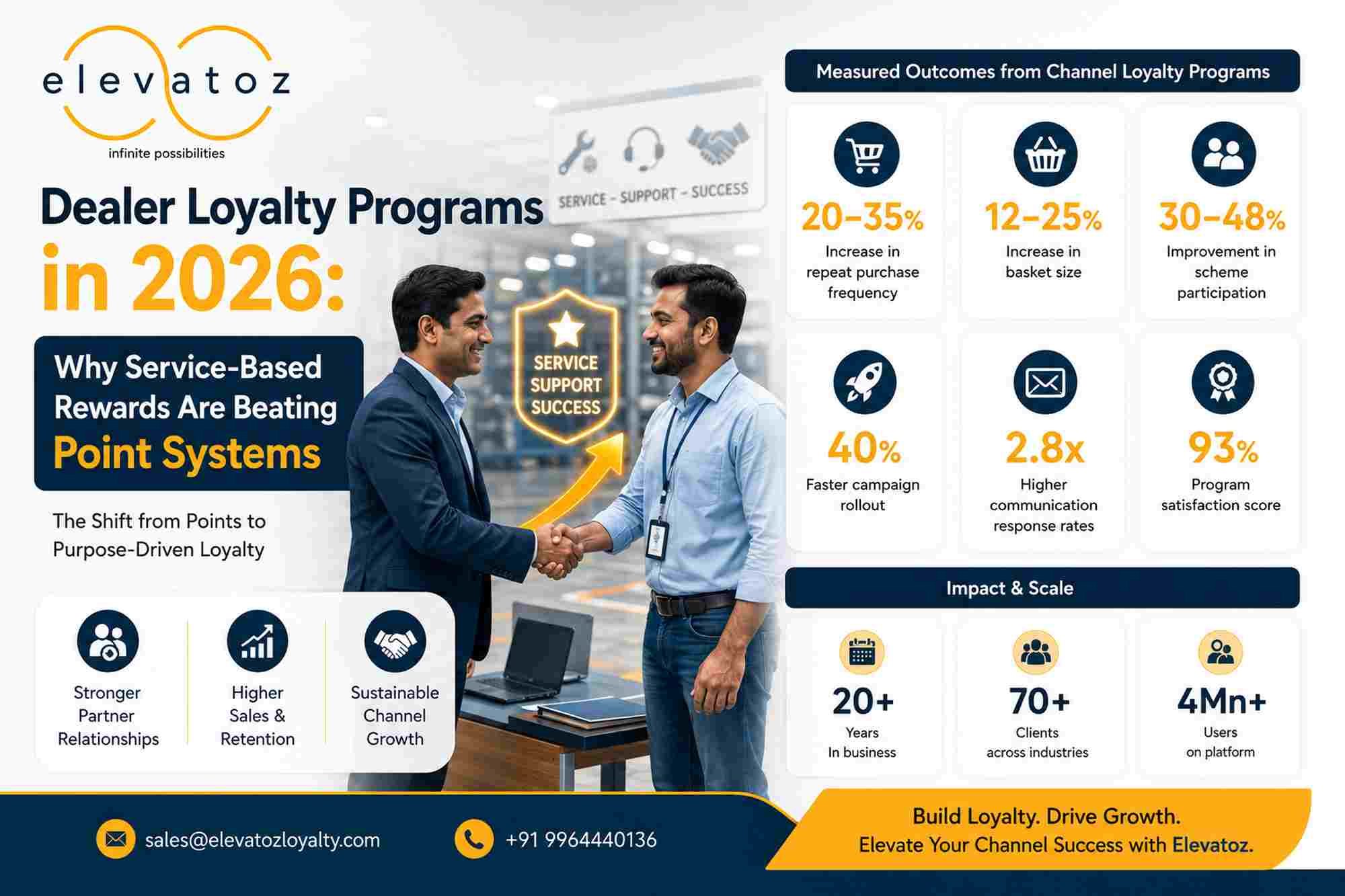
For over a decade, dealer loyalty programs ran on one formula: earn points for every purchase, stack them up, redeem for a gift voucher or a foreign trip at year-end. It worked when dealers had fewer options and less pressure on margins. It doesn’t work the same way anymore. Dealers today are juggling multiple brands, tighter working capital, and staff turnover that makes long redemption cycles feel pointless.
What’s replacing the old model? Rewards tied to actual service behaviour, not just purchase volume.
H2: Why Points Alone Stopped Working
Points-based dealer programs have a structural flaw: they reward the transaction, not the relationship. A dealer earns points for stocking your product, but the program has nothing to say about whether that dealer is actually pushing your brand at the counter, training staff on it, or resolving customer complaints quickly.
We’ve seen this play out with a building materials manufacturer we worked with last year. Their top 20% of dealers by volume were earning the most points, but a mid-tier segment of dealers, who were closing more service tickets, upselling accessories, and keeping customer satisfaction scores high, were getting almost nothing. The program was rewarding size, not effort. Once they shifted a portion of rewards toward service metrics, that mid-tier segment became their most engaged group within two quarters.
That’s the shift happening across sectors right now, from automotive to consumer durables to electrical brands.
H2: What Service-Based Dealer Rewards Actually Look Like
Service-based rewards tie payouts to behaviors that directly affect brand experience:
- Faster complaint resolution turnaround
- Product training completion by sales staff
- Consistent inventory display and merchandising compliance
- Customer follow-up and after-sales service quality
- Timely warranty claim processing
None of this replaces sales-based incentives entirely. A good dealer incentive program still rewards volume. But layering service metrics on top gives dealers a reason to engage with your brand between transactions, not just during them.
For manufacturers running large dealer networks, this also solves a visibility problem. Sales numbers tell you what happened. Service data tells you why it happened, and whether it will keep happening.
H2: Where a Dealer Engagement Platform Fits In
This kind of program is hard to run on spreadsheets and manual point ledgers. Once you’re tracking service tickets, training completions, and merchandising audits across hundreds or thousands of dealers, you need a system built for it.
This is where a proper dealer loyalty software setup earns its cost back quickly. At Elevatoz Loyalty, the platforms we build for manufacturers and channel-heavy brands are designed around exactly this shift: combining sales-based rewards with service and engagement metrics in one dashboard, so channel managers can see the full picture of a dealer relationship, not just the invoice total.
A well-built B2B loyalty platform also gives dealers real-time visibility into their own progress. That’s a small thing that matters more than it sounds. Dealers who can log in and see exactly what they’ve earned and what’s pending are far more likely to stay active than dealers waiting for a quarterly points statement.
H2: What Sales Directors and Channel Heads Should Ask Before Redesigning Their Program
Before rebuilding a dealer rewards structure, it’s worth answering three questions honestly:
- Does our current program reward anything beyond purchase volume?
- Can we track service-level dealer behavior at all right now?
- Would our dealers describe this program as motivating, or as a formality?
If the answers are uncomfortable, that’s usually a sign the program needs a rebuild, not a bigger reward budget.
Dealer loyalty in 2026 isn’t about who can offer the biggest annual trip. It’s about which brand makes it easiest for a dealer to see, track, and earn value from doing right by the customer every single day.
If you’re rethinking your dealer network strategy, Elevatoz Loyalty works with manufacturers across automotive, FMCG, building materials, and industrial equipment to design dealer engagement platforms that reward the full relationship, not just the invoice. Get in touch to see what a service-based model could look like for your network.