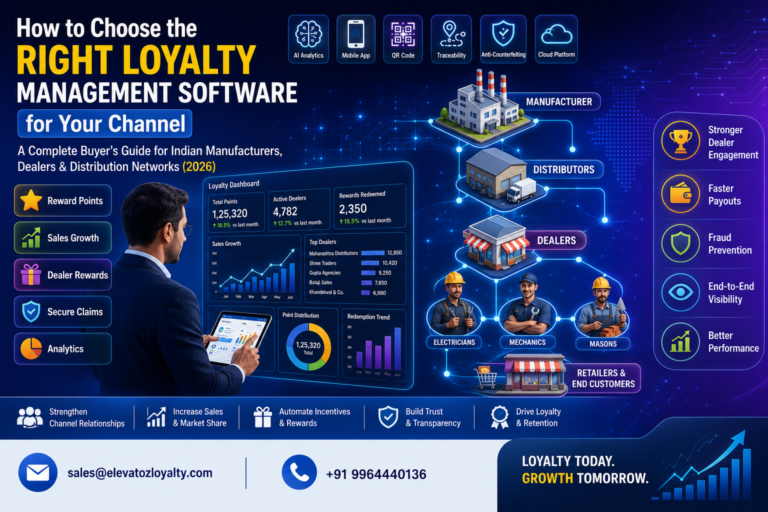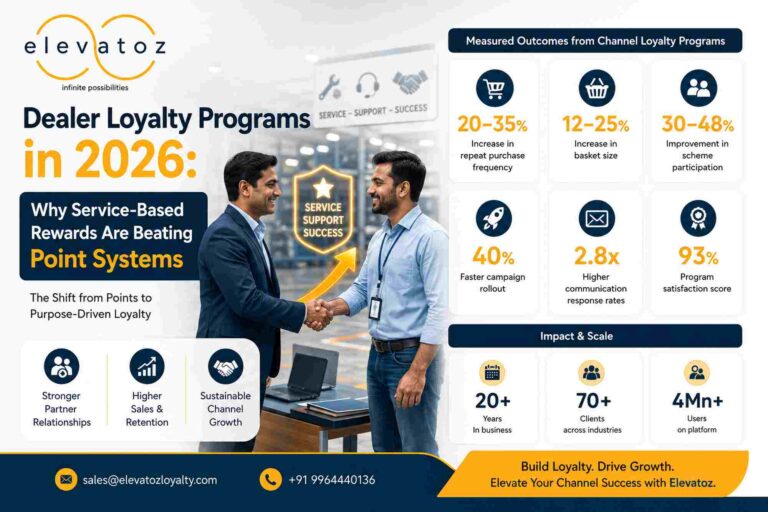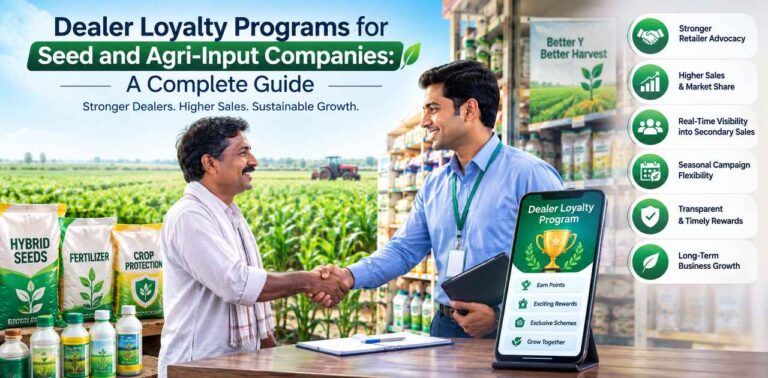
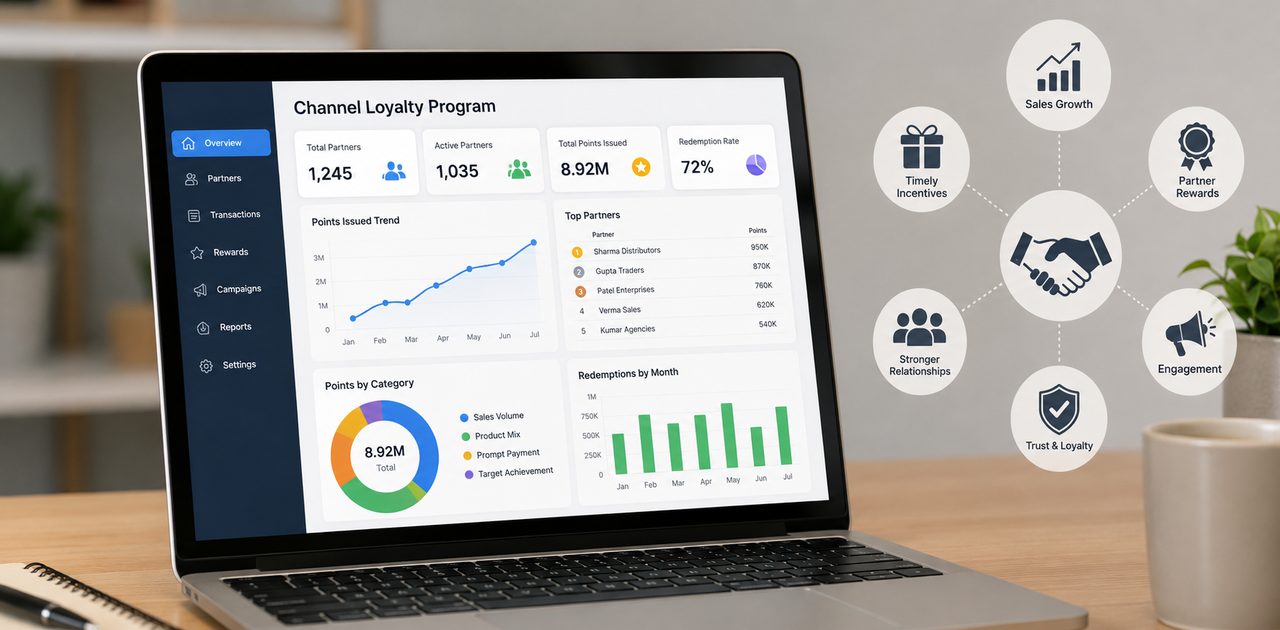
If you manufacture in India, chances are you don’t sell directly to the end customer. You sell through a web of distributors, dealers, retailers, and sometimes influencers like electricians or contractors who quietly decide which brand actually reaches the shelf. A channel loyalty program is how you keep that entire network motivated, informed, and genuinely rooting for your brand instead of a competitor’s.
This guide breaks down what a channel loyalty program actually involves, why it matters for manufacturers specifically, and what separates a program that works from one that quietly fizzles out after the first year.
What Is a Channel Loyalty Program, Exactly?
A channel loyalty program is a structured system that rewards dealers, distributors, and other channel partners for behaviors that help your business grow, consistent purchasing, sales targets, timely payments, product advocacy, or even accurate reporting.
Unlike a consumer loyalty program, which rewards individual shoppers, a channel loyalty program operates business-to-business. It’s less about a single purchase and more about an ongoing relationship built on points, tiers, incentives, and recognition.
At its core, a good channel loyalty platform handles three things well: program design, partner activity tracking, and execution, onboarding, communication, and reward fulfilment, all working together instead of living in separate spreadsheets and inboxes.
Why Manufacturers Can’t Ignore This Anymore
A decade ago, a phone call and a festive-season bonus were often enough to keep a dealer network happy. That’s no longer true, and it’s worth understanding why.
Channel networks in India have grown far more complex. A mid-sized manufacturer might work with hundreds of dealers spread across states with different languages, different digital comfort levels, and very different expectations. Managing that manually doesn’t just waste time, it actively damages trust when payouts slip or point calculations go wrong.
There’s also a competitive angle. If your competitor’s dealer program is faster, more transparent, and more rewarding than yours, guess where the sales rep’s attention goes when a customer is undecided between two brands sitting side by side.
Benefits of a Channel Loyalty Program for Indian Manufacturers
The upside of doing this well shows up in several concrete ways:
● Stronger dealer retention. Partners who feel recognized and fairly rewarded are far less likely to shift loyalty to a competing brand.
● Better sales visibility. You finally get a clear picture of which dealers and regions are actually driving growth, rather than guessing from monthly sales reports.
● Reduced manual workload. Automated point calculation and reward disbursal free up your sales and finance teams from spreadsheet reconciliation.
● Improved product push at the last mile. A well-designed dealer incentive program motivates partners to actively recommend your brand over alternatives, not just stock it.
● Faster response to market shifts. With real-time data, you can launch a targeted regional campaign within days instead of waiting for a quarterly review.
● Stronger brand equity beyond primary sales. When paired with traceability systems, manufacturers also gain visibility into how product actually moves once it leaves the warehouse, not just what was invoiced.
These aren’t abstract benefits. They show up directly in dealer satisfaction scores, sales consistency, and how much manual firefighting your regional teams have to do every month.
Channel Loyalty Program vs. Traditional Dealer Incentive Schemes
It helps to see the difference side by side, since many manufacturers assume their existing incentive scheme already qualifies as a “program” when it’s really just an ad-hoc bonus structure.
| Aspect | Traditional Incentive Scheme | Structured Channel Loyalty Program |
| Tracking method | Manual, Excel-based | Automated through dedicated software |
| Payout speed | Weeks to months | Near real-time or scheduled automatically |
| Visibility | Limited, reactive reporting | Real-time dashboards and analytics |
| Partner experience | Phone calls, SMS updates | Dedicated dealer portal and mobile app |
| Fraud control | Weak, easy to manipulate | Built-in verification and validation |
| Scalability | Breaks down as network grows | Designed to scale with partner count |
The pattern is consistent: traditional schemes work fine at small scale, but they buckle exactly when your channel network is growing fastest, which is usually the worst possible time for that to happen.
Common Mistakes Manufacturers Make
Even well-intentioned programs fail for predictable reasons. Watch out for these:
Treating it as a one-time project. A channel loyalty program isn’t a launch-and-forget initiative. It needs ongoing tweaks based on dealer feedback and performance data.
Ignoring the partner experience. If the portal or app is confusing, adoption drops fast, especially among dealers in smaller towns who may be less comfortable with complex digital tools.
Underestimating implementation. Rushing the rollout without proper training leaves regional teams confused and dealers skeptical from day one.
Skipping analytics. Running a program purely on reward automation, without real reporting, means you’ll never actually know if it’s working or just running.
Choosing on price alone. The cheapest platform often means a clunky partner experience or weak support exactly when you need it most, during a payout dispute or a major campaign launch.
Manufacturers who’ve been burned by these mistakes often find it useful to read this breakdown of why most Indian manufacturers get channel loyalty programs wrong before finalizing their own approach.
Why Businesses Choose Elevatoz Loyalty
Elevatoz Loyalty approaches channel loyalty as one part of a connected ecosystem rather than an isolated tool. The platform’s channel loyalty solution covers program design, partner activity tracking, and execution within a single workflow, so onboarding, rewards, and communication don’t live in disconnected systems.
For manufacturers dealing with counterfeit risk or unclear supply chain visibility, Elevatoz also offers anti-counterfeiting systems and traceability solutions that work alongside the loyalty layer. And in categories where field influencers matter, contractors, electricians, mechanics, influencer engagement programs extend the same structured approach to the people shaping demand on the ground.
Behind the scenes, Zentram.ai powers configuration, governance, and reporting across these systems, applying intelligence to participation data so teams can spot patterns instead of digging through spreadsheets manually.
With 20+ years of experience helping enterprises across FMCG, building materials, automotive, and electricals build stronger channel ecosystems, Elevatoz has seen firsthand what separates a program partners actually engage with from one they quietly ignore. You can explore real outcomes in our case studies or browse our research reports for deeper industry analysis.
Conclusion
A channel loyalty program isn’t just a reward scheme bolted onto your sales process, it’s a structured way of keeping dealers, distributors, and partners genuinely invested in your brand’s success. Manufacturers who get this right see stronger retention, cleaner data, and fewer fires to fight every payout cycle.
If your current approach still runs on spreadsheets and phone calls, now’s a good time to rethink it. Schedule a demo with Elevatoz Loyalty to see how a connected channel loyalty program could work for your dealer and distributor network.
FAQs
What is a channel loyalty program?
It’s a structured system that rewards dealers, distributors, and channel partners for behaviors like consistent purchasing, hitting sales targets, and product advocacy, using automated tracking instead of manual processes.
How is a channel loyalty program different from a dealer incentive scheme?
A traditional incentive scheme is often ad-hoc and manually run, while a structured program uses dedicated software for automated tracking, real-time reporting, and scalable reward management.
Why do Indian manufacturers need a channel loyalty program?
Growing, geographically spread dealer networks are hard to manage manually. A channel loyalty program keeps engagement consistent, reduces payout delays, and gives manufacturers real visibility into partner performance.
What features should a good channel loyalty program have?
Look for automated reward calculation, real-time reporting, mobile access for dealers, ERP or CRM integration, and strong fraud controls, ideally within one connected platform rather than separate tools.
How does Elevatoz Loyalty support channel loyalty programs?
Elevatoz Loyalty combines channel loyalty, traceability, anti-counterfeiting, and influencer engagement into one ecosystem, backed by AI-driven insights through Zentram.ai and over 20 years of program execution experience.