Every few months, a manufacturer launches a new dealer loyalty scheme. There’s an internal briefing, a printed brochure, maybe a WhatsApp group. Three months later, the same team is back to asking why sell-through hasn’t improved and why partners keep gravitating toward competitors.
This cycle is more common than most sales leaders would like to admit. And the answer usually isn’t that channel loyalty programs don’t work. It’s that most programs aren’t actually built to work.
What Is a Channel Loyalty Program — And What It Isn’t
A channel loyalty program is a structured system that keeps dealers, distributors, sub-dealers, retailers, and trade influencers consistently engaged with your brand — not just when a scheme is running, but across the full commercial calendar.
That’s a different thing from a trade scheme. A trade scheme is time-bound, discount-led, and ends. A channel loyalty program is continuous. It captures partner activity, rewards meaningful behavior, tracks real sales movement, and builds the kind of brand preference that holds even when a competitor’s rep shows up with a better margin offer.
Understanding the importance of dealer loyalty starts here: the channel doesn’t just distribute your product. It recommends it, specifies it, substitutes it, and sometimes quietly replaces it. A loyalty program is how you stay on the right side of that decision — consistently, at scale.
The benefits of channel loyalty programs, when designed correctly, include stronger secondary sales visibility, higher partner retention, faster new product adoption, and measurable ROI. But those outcomes require a program that’s been built around data, not just rewards.
Why Most Programs Fail Before They Gain Traction
1. The Reward Trap
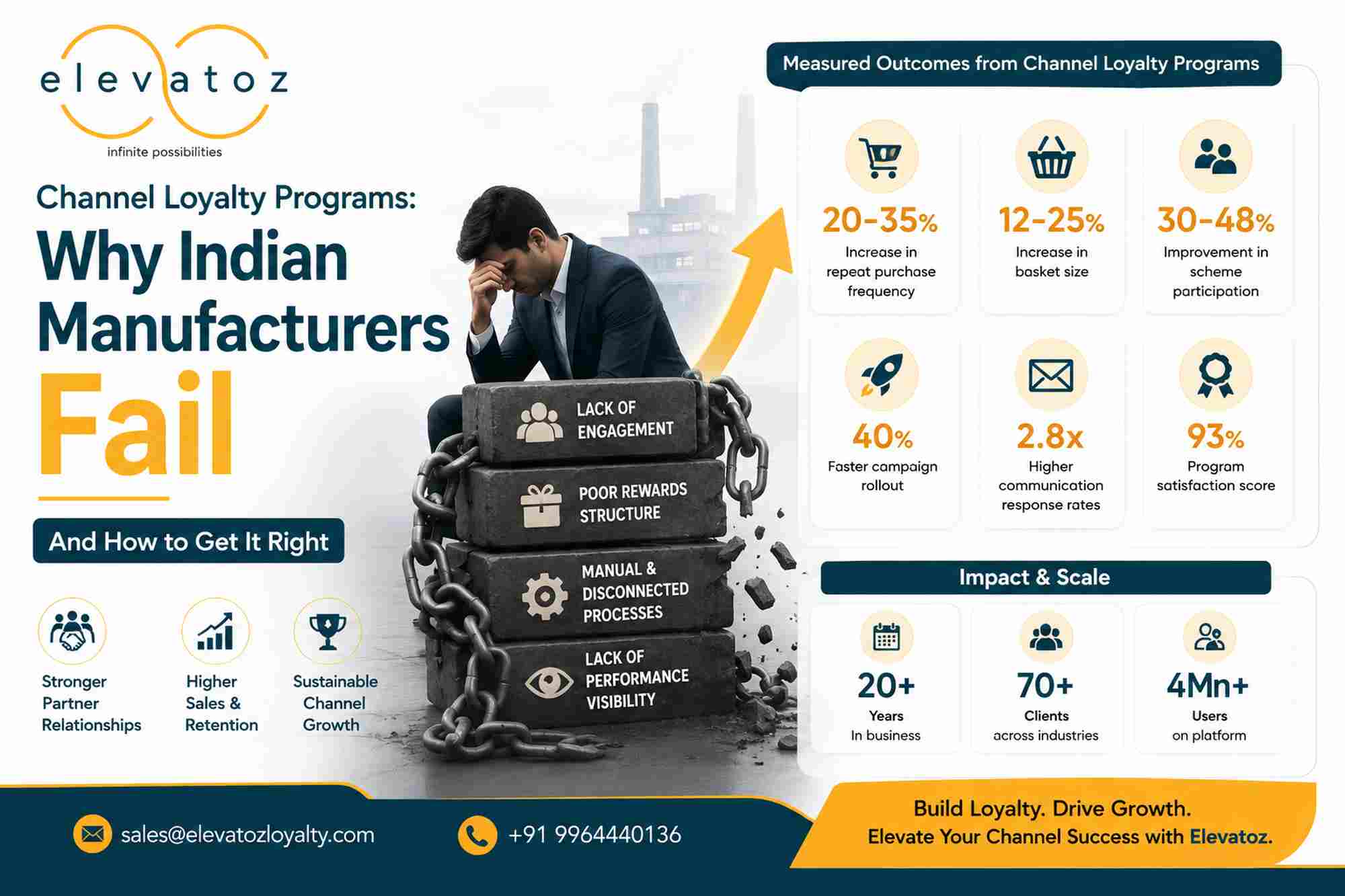
Walk into the loyalty program of most Indian manufacturers and you’ll find a points catalog. Dealers accumulate points, redeem for household appliances, and the brand calls it a loyalty program.
What it is, is a delayed discount. Partners treat it transactionally. The moment the catalog stops feeling valuable — or a competitor offers something more immediate — the engagement drops.
Real loyalty comes from feeling supported, visible, and valued by a brand. Rewards reinforce that feeling. They don’t create it by themselves.
2. No Visibility After Primary Billing
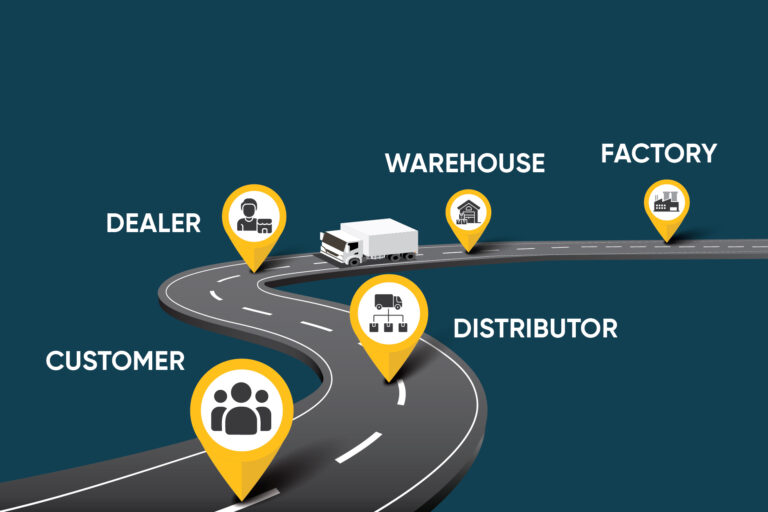
This is the problem that quietly undermines most programs: manufacturers understand their primary sales well. What happens after the stock reaches a distributor? That’s where visibility disappears.
Without secondary sales data, you can’t identify which dealers are actively pushing your products, which markets are slowing down, or whether your loyalty investments are actually driving sell-through. You’re rewarding purchase orders — not sales performance.
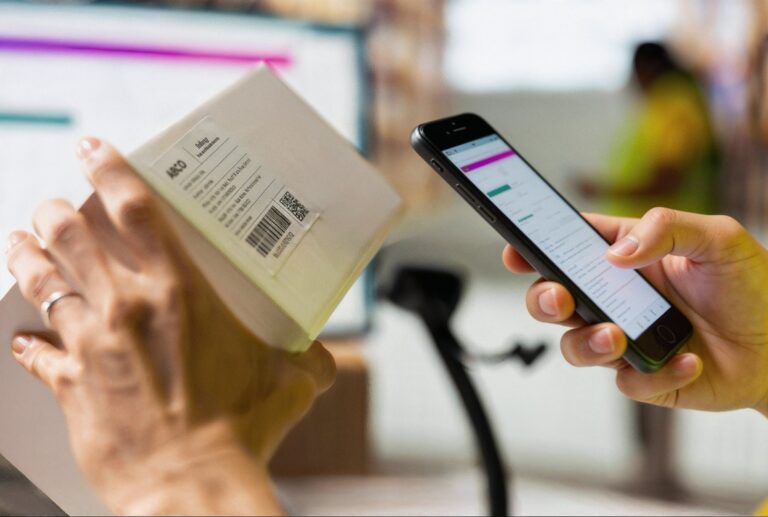
The best channel loyalty platforms in India solve this directly. They capture scan-based events, retailer-level activity, and downstream movement so brands can finally see what’s happening beyond the first transaction.
3. One Incentive Structure for Every Partner
A 500 sq ft hardware retailer in a district town and a large distributor managing 200 sub-dealers are not the same partner. Treating them with the same target, the same reward tier, and the same communication is a structural mistake.
The programs that generate real results segment the channel — by geography, purchase volume, partner type, product category — and design incentives that fit each segment. That specificity is what drives participation. Generic programs generate generic engagement, which is to say, very little.
4. Over-Reliance on Trade Schemes
The Indian market runs on schemes. Buy-X-get-Y, festival offers, quarterly billing bonuses. These aren’t inherently wrong. But when schemes become the primary — or only — lever for channel engagement, you build a channel that responds to discounts, not brand preference.
When the scheme ends, so does the behavior. That’s not loyalty. That’s a recurring cost with no compounding return.
B2B loyalty software India manufacturers are increasingly adopting creates engagement between transactions — through milestone recognition, communication, training content, and program updates — so the relationship doesn’t reset every quarter.
5. Communication That Launches Once and Disappears
A program with no ongoing communication is effectively invisible. Yet this is exactly how most programs run. There’s an announcement, a launch communication, maybe a field team briefing — and then silence until the next scheme cycle.
Dealers don’t think about a loyalty program they haven’t heard from in six weeks. Regular touchpoints through mobile apps, WhatsApp updates, and personalized notifications aren’t optional extras. They’re what keeps a program active in a partner’s daily business thinking.
6. No Measurement, No Improvement
What percentage of enrolled partners are actually active? What’s the redemption rate on your top reward tier? Which regions show the strongest correlation between program participation and sales growth?
If your team can’t answer these quickly, the program is running blind. And a program that can’t be measured can’t be improved.
Serious channel loyalty solutions include real-time dashboards, participation analytics, and performance visibility that allow brands to intervene early — before disengaged partners drift away entirely.
What a High-Performing Channel Loyalty Program Actually Looks Like
The programs that consistently outperform share a few structural characteristics:
They capture the right data. Not just purchase orders — actual sales activity, scan events, partner engagement signals, and downstream movement.
They segment partners deliberately. Different incentives for different partner profiles. One size serves no one well.
They stay present. Regular, relevant communication that keeps partners informed and engaged across the full year — not just during scheme windows.
They reward behavior, not just billing. Points for product training completion, referrals, new retailer registrations, and consistent stocking — not just quarterly purchase volumes.
They measure what matters. Enrollment rates, active participation, redemption velocity, and ultimately, the business outcomes the program was designed to influence.
How Technology Changes the Equation
Managing dealer incentives through field visits, spreadsheets, and manual reporting worked when channel networks were small. At scale, it breaks down quickly. The data is too scattered, the exceptions too frequent, and the response time too slow.
Modern channel loyalty solutions automate the operational layer — reward calculation, communication triggers, redemption workflows, performance reporting — so program teams can focus on strategy rather than administration.
More importantly, they make the channel visible. Secondary sales tracking, partner activity dashboards, and scan-based event capture give manufacturers a clearer picture of what’s actually happening on the ground than any field report can provide.
Implementing a Channel Loyalty Program: Where to Start
For manufacturers evaluating whether to build or upgrade a channel loyalty program, the most important first step isn’t choosing a reward catalog. It’s diagnosing what’s missing.
Ask: Do we have secondary sales visibility? Are our incentives differentiated by partner segment? Are we measuring participation and ROI? Is our communication consistent and two-way?
When you’re ready to implement a channel loyalty program that addresses these questions systematically, the right platform partner matters as much as the strategy itself.
How Elevatoz Loyalty Helps Manufacturers Get This Right
Elevatoz Loyalty is a channel loyalty platform provider in India with 20+ years of experience working with enterprises across building materials, agriculture, automotive aftermarket, electricals, consumer durables, FMCG, and more.
The platform covers the full program lifecycle — partner onboarding, activity capture, validation, reward governance, fulfilment, communication, and analytics — within one connected operating model. Clients include Deepak Fertilizers, DUROPLY, EATON, Shriram Bioseed, Bayer, Coca-Cola, and others operating large, distributed channel ecosystems.
Elevatoz’s proprietary technology layer, Zentram.ai™, powers workflow control, approval management, and performance intelligence across programs — giving manufacturers the governance and visibility they need to run programs at scale without operational fragmentation.
If your current channel loyalty program isn’t delivering the engagement, visibility, or ROI you expected, the gap is usually in the infrastructure — not the intent.
Request a loyalty platform demo to see how Elevatoz approaches channel loyalty for your industry and network structure.
FAQs
What is a channel loyalty program?
A channel loyalty program is a structured engagement system for dealers, distributors, retailers, and trade influencers. It uses incentives, activity tracking, communication, and data to build consistent brand preference and drive sell-through across a distributed sales network.
What are the main benefits of channel loyalty programs?
The key benefits include improved secondary sales visibility, stronger partner retention, higher participation in product promotions, better new product adoption rates, and measurable return on program investment — when the program is built on data and continuous engagement.
Why do most channel loyalty programs fail in India?
The most common failure points are over-reliance on generic rewards, no secondary sales visibility, identical incentives for all partner types, poor post-launch communication, and no systematic measurement of program performance.
How is a channel loyalty program different from a trade scheme?
Trade schemes are short-term, discount-based, and transactional. Channel loyalty programs are continuous, engagement-led, and designed to build cumulative brand preference — they work between scheme cycles, not just during them.
Which industries benefit most from channel loyalty programs?
Building materials, agricultural inputs, automotive aftermarket, electricals, FMCG, consumer durables, paints, pipes, and real estate all see strong results — anywhere purchase decisions are influenced by channel partners rather than direct-to-consumer marketing.
How do I implement a channel loyalty program for my business?
Start by auditing your current channel visibility, partner segmentation, and incentive structure. Then identify what technology and operational support you need. Working with an experienced channel loyalty program provider like Elevatoz ensures the program is built on the right foundation from day one. Schedule a demo to begin.